


Hello and welcome back. If we seem a bit distracted today, it is because the Ashes is on in the background. We have a screen to the left, and if a wicket falls, we might just pivot to cricket talk. But for your sake, we will try to stay focused on a much more painful topic for Perth business owners: the absolute nightmare of finding good staff in Western Australia right now.
My week has been a bit of a blur of client meetings where the sentiment is exactly the same: “I have too much work, just not enough staff”. If you are running an industrial or B2B business in Perth, you are not just competing with the shop down the road. You are competing with mining giants where someone can earn $200,000 digging holes.
If your current recruitment strategy is just “chucking an ad on Seek,” you are essentially fighting with one hand tied behind your back.
The Seek trap and the 10% problem
The traditional way of hiring is broken. You have a role, you put an ad up for four weeks, and you pray that an A-player happens to be looking at that exact moment. The reality is that A-players are rarely browsing job boards.
“A players often aren’t looking. They need to be enticed, right? But they’re not browsing job boards and job sites because they’re generally pretty happy.” – Mel
When you only use Seek or LinkedIn Recruiter, you are only accessing a tiny talent pool: the people actively looking for a move. To find the best people, you have to move from “pull” marketing to “push” marketing. You need to put your brand in front of people who do not even know they want to work for you yet.
What actually defines an A-player?
We hear the term “A-player” thrown around a lot, but Mel and Mon have a very specific definition. It is a matrix of two things: high values alignment and high technical ability.
We have all worked with a “technical legend” who is an absolute tosser to be around. They bill more than anyone else, but they poison the culture. That is not an A-player. In our office, we use the Patrick Lencioni model: we look for people who are hungry, humble, and smart.
The “smart” part isn’t about IQ: it is about emotional intelligence. If you find someone with those three traits, you can usually train them for the technical side of the job.
The power of proof and messaging
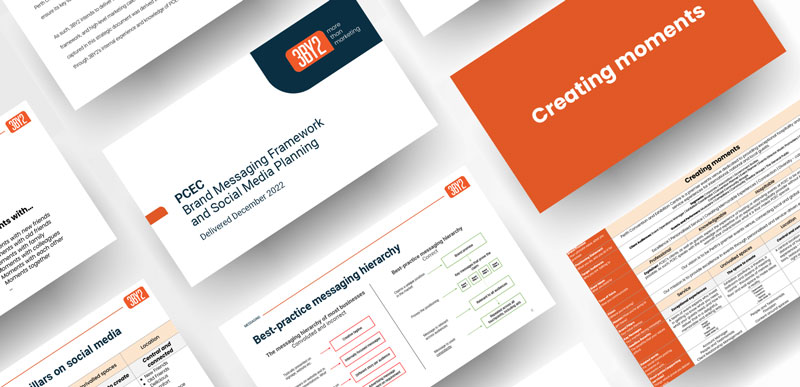
If you want to attract someone from a comfortable job, you have to offer something unique. This starts with your messaging framework. You have to define what makes you better than the competition, and you have to be able to back it up with proof.
A great example is Swick Mining Services. Their messaging focuses on building a career, not just a job. They can point to their own Managing Director, who started as a driller’s offsider: a notoriously difficult entry-level role. That is a powerful proof story.
They even built a mock underground mine for training so new recruits can experience the heat, noise, and dust before they are sent thousands of metres underground. It helps prevent “ghosting” by making sure the candidate can actually handle the environment before the company invests tens of thousands in their training.
The “always on” recruitment budget
You should not wait until a staff member leaves to start marketing your business as a great place to work. Smart operators are now splitting their marketing spend 50/50 between client acquisition and recruitment branding.
For a small to medium business, you do not need a massive budget. We often recommend an “always on” recruitment ad spend of about $300 to $500 a month. This keeps your brand in front of your target demographic on platforms like YouTube, TikTok, and Instagram.
“Consider always on brand ads. Your brand now has to be out there to attract people. So when we say always on, there is always some form of push marketing working out there in the market.” – Mel
If you are looking for a tradesperson, target your ads toward interests like four-wheel driving, fishing, or boating in specific geographic areas. It is about building a “trust bucket” so that when that person has a bad day at their current job, your brand is the first one they think of.
How to fix your talent pipeline this week
If recruitment is killing your growth this week, here is your one-thing to-do list: talk to your best employees. Ask them why they stay. Ask them what they love about the culture. Use their words to define your unique messaging.
Then, start telling those stories through simple staff videos. Do not just push people back to a Seek ad where you can’t measure the results. Build a simple enquiry form on your own website so you can harvest those leads directly.
Recruitment is just marketing with a different audience. Deliver on your promises, keep your brand “always on,” and stop waiting for the perfect candidate to find you on a job board.